
APIS AND INTEGRATIONS
What is an API and how it connects your e-shop with accounting
Retyping orders into accounting by hand costs time and causes errors. A simple explanation of what an API is and how an e-shop, stock and accounting can communicate automatically.
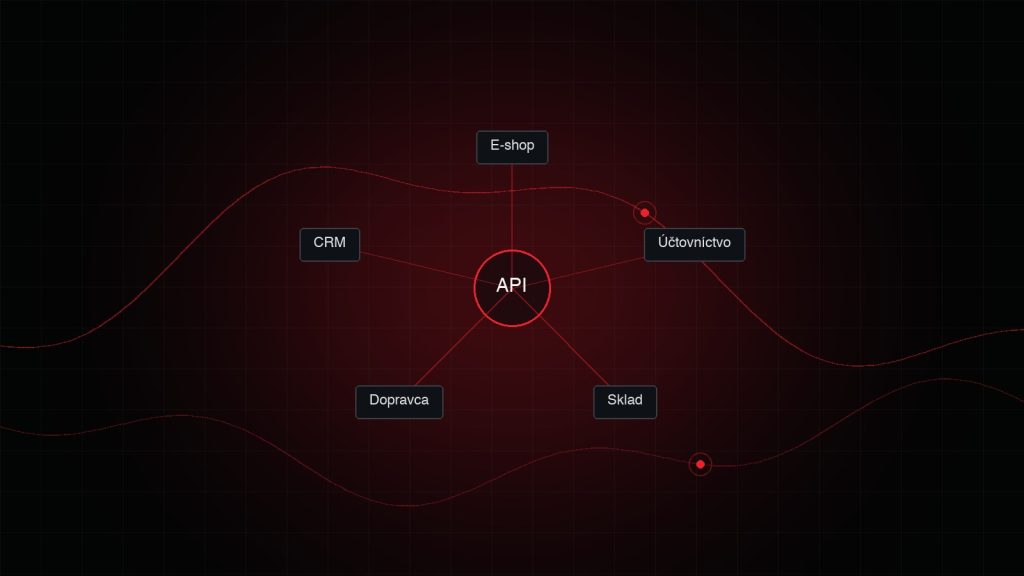
An order arrives in the e-shop, someone retypes it into the accounting system, then updates the stock and finally creates the shipment with the carrier. With ten orders a day it’s annoying; with hundreds it’s unsustainable. The solution is to connect the systems so they pass the data to each other on their own. That’s what an API is for.
An API in simple terms
An API (Application Programming Interface) is an agreed way for two programs to communicate. Think of it as a waiter: the e-shop says “issue an invoice for this order”, the API carries the request to the accounting system and brings back the answer, such as the invoice number. Nobody retypes anything.
Most modern systems – from e-commerce platforms and accounting software to carriers – offer an API today. The developer’s job is to design when and which data should move and what to do when something fails.
What is typically connected
- E-shop → accounting: automatic invoices and credit notes after payment.
- Stock ↔ e-shop: up-to-date stock levels, so you don’t sell what you don’t have.
- E-shop → carrier: creating the shipment and a tracking number for the customer.
- Form → CRM: inquiries straight in the sales system.
- Payment gateway → e-shop: changing the order status after payment.
What the quality of an integration depends on
A connection that works in the ideal case is easy. A good integration, however, also thinks about situations when something goes wrong:
- What if the accounting system is unavailable right now? The request must be retried, not lost.
- What if the same order arrives twice? Two invoices must not be created.
- Who finds out about an error? The integration must log it and alert a person.
- How are the access credentials protected? API keys must not be visible from the outside in the website’s code.
How much it costs and when it pays off
A simple connection of two systems with a standard API is a matter of days, not months. The return is easy to calculate: how many minutes a day you spend retyping today and how much the resulting errors cost. For a typical e-shop, an integration often pays for itself within a few months.
Summary
An API is a bridge between systems. If you move data by hand today, it can almost certainly be automated. Write which systems you use and the options for connecting them will be checked.