
AUTOMATION
5 business processes worth automating first
Automation doesn't have to be a big project. Here are five common tasks that take up the most time in companies and can be automated quickly with a clear return.
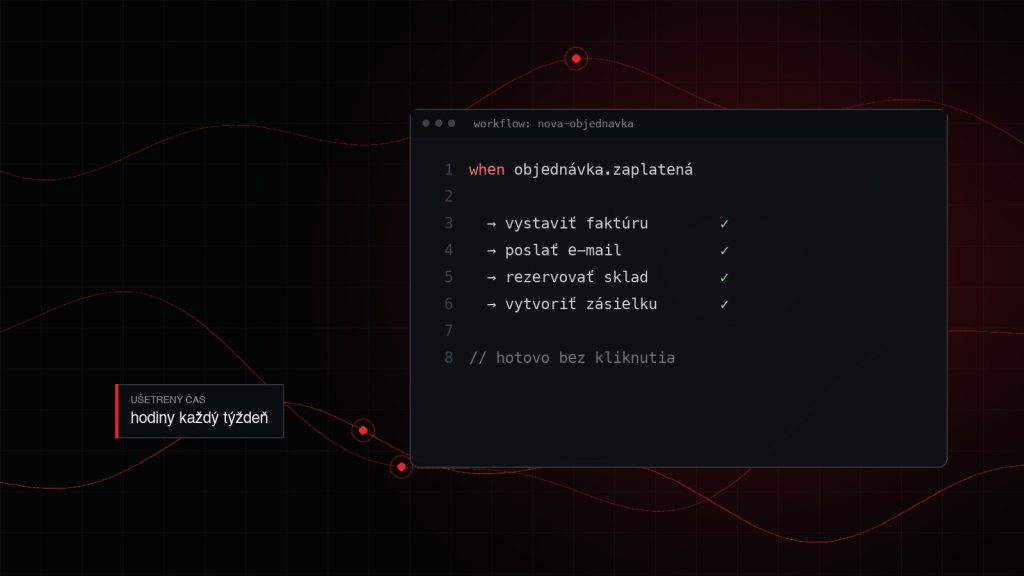
When they hear the word automation, many people imagine robots and expensive systems. In reality it is usually about small tasks someone does by hand every day, even though a program could handle them. Here are five areas with the fastest effect.
Invoicing after an order
An order is paid, someone opens the accounting system, creates an invoice, downloads the PDF and sends it to the customer. This whole chain can run automatically the moment the payment arrives. The customer gets the document immediately and you don’t have to check anything.
Notifications and reminders
An appointment reminder, a warning about an upcoming due date, information that a parcel has been shipped, an internal message when a big order comes in. These things are easy to forget when done by hand. Automated, they always go out, and at the right time.
Reports
If someone puts together a sales spreadsheet from several systems every Monday, that’s an ideal candidate. The report can generate itself and be waiting in your inbox in the morning. The data is accurate, and the person’s time can go into analysing it instead of assembling it.
Moving data between systems
Contacts from a form into the CRM, products from the ERP to the e-shop, orders to the warehouse. Every manual retyping is a chance for an error. Connecting the systems via an API removes not only the work but also the typos.
Document processing
Incoming invoices, orders in PDF, contracts. Thanks to modern AI tools, the necessary data can now be extracted from a document and prepared for approval. A person only checks it instead of retyping it.
How to choose where to start
A simple approach works well: for a week, write down the recurring tasks and how much time they take. Then rank them by two criteria: how much time they cost and how often mistakes happen. The task that wins on both is your first automation.
It’s important to start with a small step. The first automation shows the benefit, and the team gets used to some things happening on their own. Only then does it make sense to move on to other processes.
What to watch out for
- Automate a process that works. Automation only speeds up a bad process.
- Think about exceptions. What happens when a value is missing or a system doesn’t respond?
- Keep an overview. Every automation should keep a record of what it did and send an alert on errors.
Summary
The best automations are unobtrusive. They run in the background, save hours every week and soon nobody remembers how it was done before. If you’d like to find out which tasks in your company have the greatest potential, it pays to go through them together.