
BLOG
When spreadsheets aren’t enough: when a custom application pays off
Excel is great for getting started, but as a company grows it becomes a brake. Here are the signs it's time for your own system, and why Laravel is often the right fit for these applications.
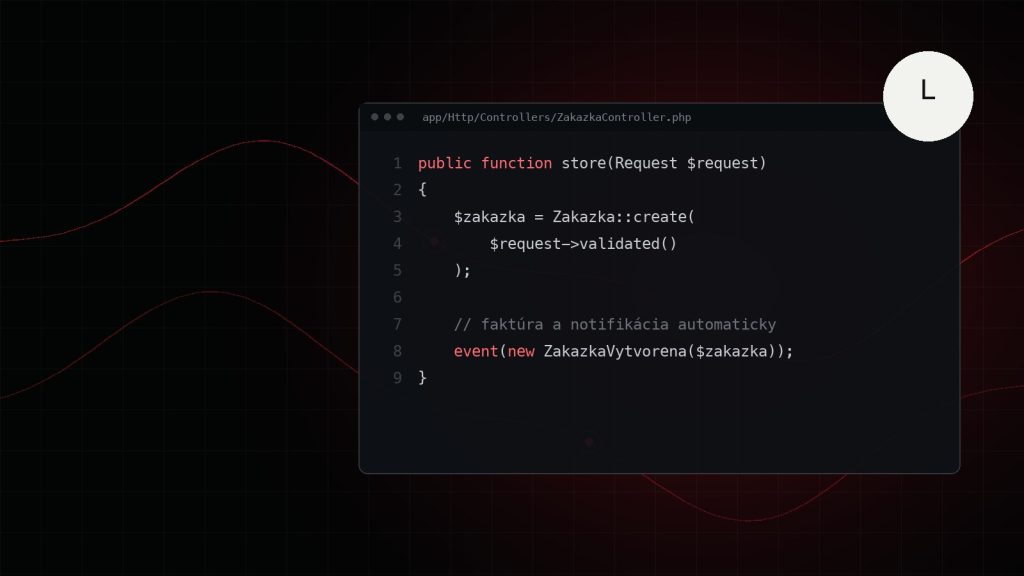
Almost every company starts with spreadsheets: job records, orders, stock, attendance. At first it’s fast and cheap. But as the team and the volume of data grow, spreadsheets start to hold you back: versions get overwritten, data gets duplicated and nobody knows exactly which file is current.
Signs that spreadsheets are no longer enough
- You retype the same data in several places.
- Several people edit one file, causing conflicts or lost data.
- You need different permissions: some people should see prices, others shouldn’t.
- You put reports together by hand and it takes hours.
- You want to connect an e-shop, accounting or a customer portal.
- A mistake in one formula has already cost you money.
If you nodded at two or more of these, it’s time to think about a system.
Off-the-shelf software or a custom application?
A ready-made solution pays off if your processes match the way its authors designed it. The problem starts when the company has to adapt to the software instead of the other way round. A custom application mirrors exactly how you work, grows with you and doesn’t contain dozens of features nobody uses. And the source code belongs to you.
Why Laravel
Laravel is a modern PHP framework used by companies all over the world. For clients it has several practical advantages:
- Security built in. Protection against SQL injection, CSRF and XSS is part of the framework, not an extra layer.
- Clear architecture. The code is structured so that another developer can find their way around it too. You don’t depend on one person.
- Queues and scheduled tasks. Sending emails, generating PDFs or synchronisation run in the background and don’t slow users down.
- Easy APIs. The system can be easily connected to an e-shop, a mobile app or accounting.
How to start sensibly
The biggest mistake is wanting everything at once. It is best to start with a first version that solves the most painful problem, for example job records with automatic invoicing. Once it proves itself, further modules are added. The investment is spread over time and every step brings a measurable result.
Summary
Spreadsheets are a good servant but a bad master. Once they start costing time and causing errors, a custom application pays for itself faster than you’d expect. If you’re considering this step, the first move is to go through your processes and define what the first version should include.