
BLOG
Ways to build a website
There are many ways to build a website or system based on the requirements specification for a given project.
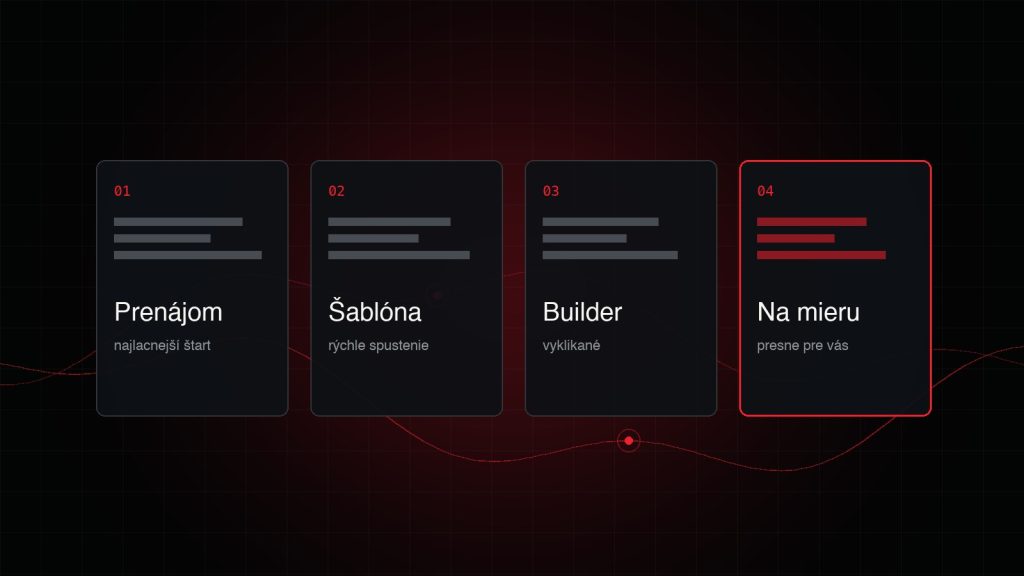
What are the options for building a website?
In the past there were only a few ways to develop a website. Over time the market grew and more options appeared that let you do it even without programmers. New frameworks and libraries that make programming easier keep being created for developers. Today a website can be built in several ways: you can rent a website, buy a theme for a content management system, use a visual page builder, have the website programmed in a content management system, or have everything programmed from scratch.
Pros and cons of renting a website or buying a theme
The main advantage is a lower price for the project. When you rent a website, you pay at regular intervals for running a finished solution. If you choose a website based on a purchased theme, you pay once for the theme and then, if you can manage it and change the content yourself, that’s it. If not, you find someone to manage the website and are invoiced for changes at a pre-agreed rate. This approach saves money and gets your website ready to launch much faster.
But these solutions also have drawbacks. Your website won’t be original. Since it is a freely available solution, you will come across similar websites on the internet. If you want something extra programmed on the website, it is very time-consuming and complicated – not to mention a rented website, where it is sometimes not possible at all. If you buy a theme and then have functionality added, the price over the whole period of use sometimes exceeds the price of a custom solution. These solutions also tend to load a little more slowly. You lose originality, the ability to extend the project and page speed – and with a rented website you sometimes don’t even own the solution.
Building a website with a visual editor
Another way to develop a website is with a visual editor. This approach is aimed mainly at designers who can build a website directly in a visual editor. WordPress itself offers visual editors such as the Divi plugin. With this approach you need basic knowledge of website development, how a content management system works and what to watch out for. It is a little harder than designing website graphics in a graphics program, but nothing complicated. The advantages again include a lower website price, and the client owns the website directly. Extending the website is easier, but you are still limited. You can create a professional website, but adjusting every detail requires a programmer. The disadvantages of this approach are slower page loading and the limits of the visual editor.
Building a website on a content management system
This is one of the best approaches. The project is prepared and designed from start to finish. The code is written to measure and every feature can be optimised as well as possible. When you use a content management system, roughly 80% of the programming is the look of the website, while the CMS provides the functionality – for example login, registration, buying products, contact forms and more. Building such a website requires a so-called front-end web developer and a designer. More complex projects also need a web architect who designs the website; the designer then creates its look and the programmer codes the design. The finished website is then handed over to a marketer and a copywriter, who promote it and write its content. The advantages include full optimisation of the website, originality, extensibility, ownership and loading speed. The disadvantages are a higher project price and a longer development time.
Custom website development with a custom system
The solution for demanding projects. This approach is used when you don’t want a company website or an e-shop, but a web system. It involves designing the project, creating the graphics, building the system and building the interface. You need a web architect who designs the system according to the requirements and chooses the right technologies for the project. If you want to develop a company system to your requirements, this is the right solution. Today it no longer makes sense to build a system available for only one operating system – a web application is the way to go. If you choose to build an API-based system, you can create various clients for Android, iOS, Windows, Mac and Linux as well as the web, and communicate with the system from multiple devices through the API. The main advantages of this solution are extensibility and the ability to build anything. The disadvantages are a very high price and long development time.